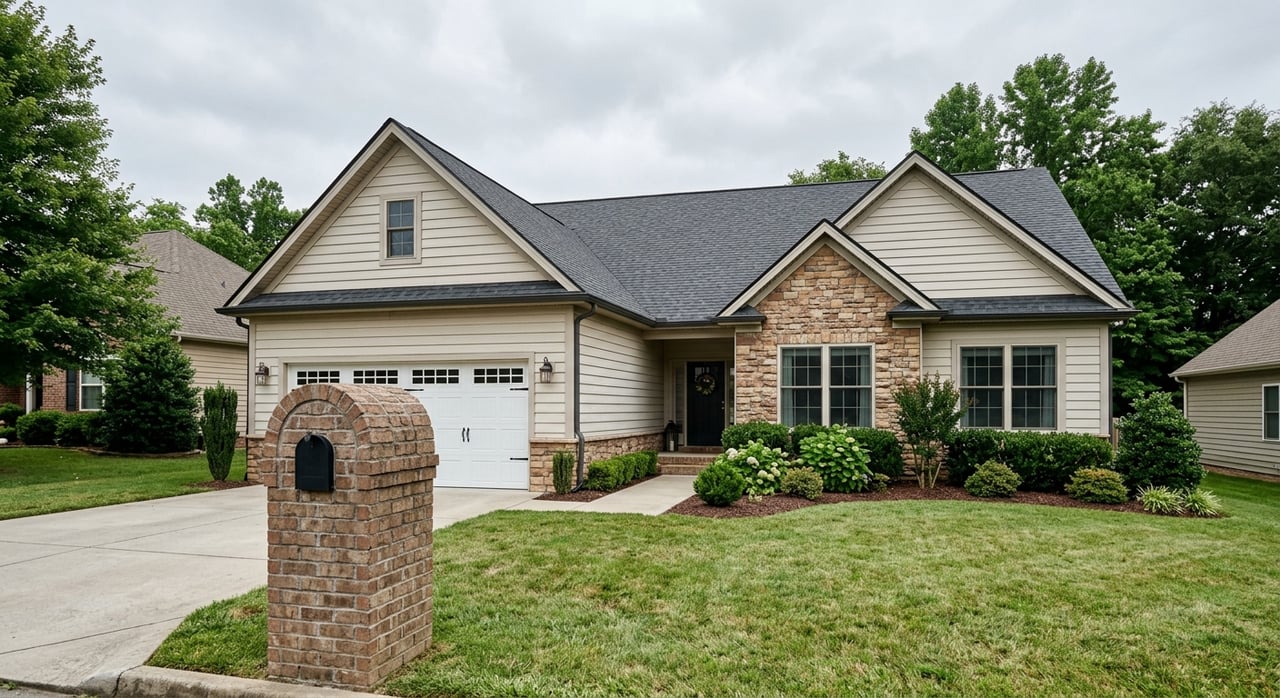
New Construction vs Resale in Edmond: What Fits Best?
May 28, 2026
May 28, 2026
Trying to choose between a brand-new home and an older one in Edmond? You are not alone. This is one of the biggest decisions buyers face, especially when both options can look appealing for very different reasons. If you want to weigh cost, condition, timeline, and long-term fit with more confidence, this guide will help you sort through the tradeoffs. Let’s dive in.
Edmond gives buyers a wide range of options, from newer communities with active construction to older areas with more established homes. Current market data puts Edmond roughly in the mid-$300,000s to $400,000 range, depending on the source and timing, which means both new construction and resale homes are part of the conversation for many buyers.
That variety is helpful, but it can also make the decision harder. A new home may offer modern finishes and a builder warranty, while a resale home may offer a bigger lot, a more established setting, and a faster path to move-in.
New construction in Edmond is not just one type of product. Current listing data shows hundreds of new-construction homes in the broader Edmond search area, with examples ranging from the high $200,000s into the $700,000s.
That means you can find new homes at entry-level, move-up, and higher-end price points. It also means you should compare each builder and community carefully rather than assume all new homes offer the same value.
Many current new-build listings in Edmond highlight features buyers often want today. Examples include tall ceilings, wood-look tile, freestanding tubs, spa-style showers, and rear patios.
Of course, not every builder includes the same finish package. Some homes may look upgraded online but require added cost for certain selections, so it helps to compare the base price with what is actually included.
One of the biggest differences between new construction and resale is the feel of the homesite and surrounding area. Edmond planning materials show that some newer plats can have smaller lots than older additions.
In planning examples, some newer lots were as small as 4,800 square feet, while older nearby additions ranged from about 9,100 to 17,000 square feet. That does not mean every new neighborhood has small lots, but it does explain why two homes at similar prices can feel very different in person.
Edmond also requires at least 20% tree canopy in new residential developments. That rule does not apply to existing subdivisions or lots under five acres.
For buyers, this matters because newer communities may be designed with preserved open space and planned landscape standards in mind. At the same time, older neighborhoods may already have mature trees and a more established streetscape.
A new home may offer stronger energy-efficiency potential than an older home. In Edmond, builders must submit an energy code compliance sheet as part of the permit process, which adds an extra layer of documentation during construction.
This does not mean every new home will perform the same way. Still, recent-code construction can be a major plus if lower utility use, comfort, and durability are high on your list.
Warranty coverage is one of the clearest advantages of new construction. Many newly built homes come with a builder warranty that often covers workmanship and materials for one year, major systems like HVAC, plumbing, and electrical for two years, and major structural defects for up to 10 years in some plans.
Coverage can vary, so you should always review the actual warranty terms. Even so, many buyers like the peace of mind that comes with a home no one has lived in before and a warranty already in place.
If you buy early enough in the process, you may have more say over finishes, materials, or certain design selections. That can be a big advantage if you want a home that feels more tailored to your taste from day one.
You also have the chance to monitor quality during construction. For buyers who want more visibility into how the home comes together, this can be very appealing.
A resale purchase usually focuses on contract terms, inspection, and closing. New construction adds more moving parts because Edmond requires permit review, a pre-construction meeting, and staged inspections before the home is complete.
That means you need to be comfortable with a process that can involve more waiting, more coordination, and more uncertainty around completion dates. If you have a tight move deadline, that can be an important factor.
Many buyers assume a brand-new house will not have problems. In reality, new homes still need careful review.
Common areas where new homes can have issues include grading and drainage, foundation details, wall framing, and energy-related items such as air sealing and insulation. A home may be new, but that does not replace the need for independent inspections and close attention to detail.
One of the best advantages of new construction is the chance to inspect the home before the walls are closed up. A pre-drywall inspection can help identify concerns with framing, plumbing placement, wiring, flashing, insulation, and HVAC duct placement before those items are harder to access.
That kind of checkpoint can be valuable because drywall can hide issues that become more expensive to correct later. If you are buying new, this is one of the smartest parts of the process to take seriously.
If neighborhood feel matters as much as the house itself, resale may be the better fit. Older Edmond additions can offer larger lots, more spacing between homes, and a more mature streetscape.
That may appeal to you if you want more yard space or simply prefer a home in an area that feels settled. For many buyers, this is the main reason resale stays competitive with new construction.
With a resale home, what you see is the actual product. You are not relying on plans, renderings, or an unfinished timeline.
That can make decision-making easier because you can evaluate the layout, lot, condition, and surroundings as they exist today. If you want more certainty before committing, resale has a real advantage.
Because the home is already built, resale purchases usually avoid construction delays. The focus shifts instead to inspections, repair requests, and contingency deadlines.
For buyers with a narrow moving window, that can be a big benefit. A more predictable timeline can reduce stress, especially if you are coordinating a lease ending, a relocation, or the sale of another property.
Resale homes often come with age-related wear. Common problem areas in existing homes include grading and drainage, roof damage, electrical issues, heating-system problems, plumbing defects, structural concerns, ventilation problems, and water or air penetration.
In practical terms, that means you may need to budget for repairs or updates sooner than you would with a new home. Older plumbing, outdated electrical service, and aging mechanical systems deserve careful review.
A home inspection is extremely useful, but it is not technically exhaustive. Inspectors evaluate visible and readily accessible systems, but they do not certify code compliance or guarantee that concealed conditions will be found.
That matters in resale homes because some wear is hidden behind walls, under floors, or above ceilings. The best approach is to order an independent inspection early and follow up quickly if additional specialists are needed.
Some buyers of resale homes choose to purchase a home warranty, but that is different from a builder warranty. A home warranty is usually a separate service contract that costs extra and is often used for existing homes.
That distinction matters when comparing monthly and long-term costs. A lower upfront price on a resale home may still come with future repair exposure that a new home warranty could help reduce.
New construction is often the better fit if you value newer materials, current design, and warranty protection more than mature lot size or immediate move-in speed.
Resale is often the better fit if you care most about setting, lot size, and knowing exactly what you are buying before you move forward.
In Edmond, the right choice is not just about new versus old. It is about how the home lines up with your budget, timeline, and tolerance for future work.
That is where construction-informed guidance can make a real difference. When you compare builder specs, upgrade costs, inspection findings, drainage concerns, roof age, or mechanical condition, it helps to have someone who can look beyond the listing sheet and keep the process organized.
If you are weighing new construction against resale in Edmond, a smart first step is to compare both in person. Seeing lot size, layout, finish quality, and condition side by side usually makes the decision much clearer.
When you are ready to talk through your options, schedule a consultation with Matt Berry.
Stay up to date on the latest real estate trends.


Whether you’re buying, selling, or planning your next move, Matt Berry is ready to work for you. Reach out today to start your real estate journey with confidence and clarity.