Edmond Foundation Disclosure Rules and Hidden Risks
September 17, 2026
September 17, 2026
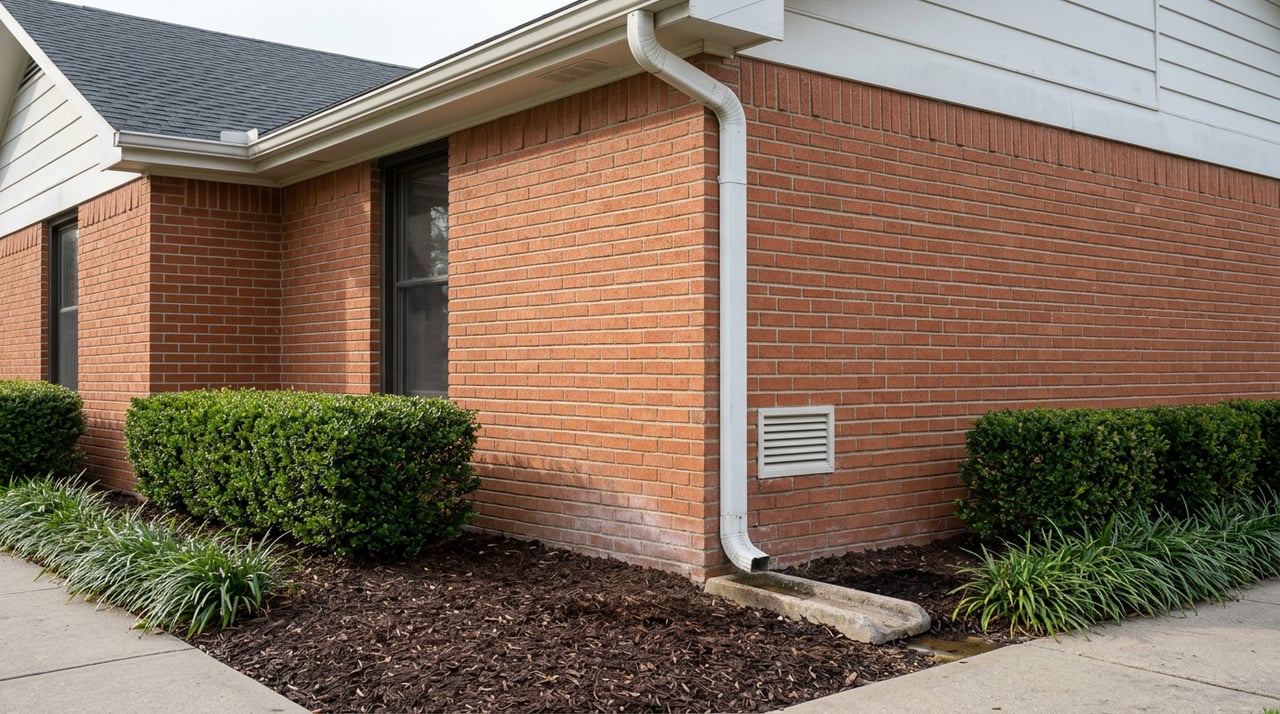
A seller in Edmond fills out the state disclosure form and checks "do not know" next to the question about foundation defects. They mean it. They've lived in the house for nine years, the doors have always stuck a little in August, and the hairline crack over the garage door has been there since they can remember. Nobody told them that's a pattern. Nobody told them it has a name.
That honest checkbox is where the real story starts, not where it ends. As Shelton Law Firm explains, Oklahoma's disclosure law only asks sellers to report what they actually know. It doesn't ask them to be right, and it doesn't ask them to understand their own soil. In Edmond specifically, that gap matters more than it does in a lot of neighboring suburbs, because of what's underneath the slab.
Oklahoma's Residential Property Condition Disclosure Act requires sellers of one- or two-unit residential properties to complete a standardized form, currently the version dated for 2026 and published by the Oklahoma Real Estate Commission. The form asks sellers whether they're aware of defects in the roof, walls, floors, foundation, or basement, but the legal standard behind every answer is "actual knowledge," not inspection-grade certainty. A seller who genuinely doesn't connect a sticking door to foundation movement can check "do not know" and be fully compliant.
There's also a difference between a Disclosure Statement and a Disclaimer Statement. Sellers who have actually lived in the home fill out the Disclosure Statement, item by item. Sellers who never occupied the property, an estate seller or an investor flipping a house sight unseen, can file a Disclaimer Statement instead, which states no knowledge and makes no representations at all, according to Avenue Legal Group. A Disclosure Statement is only valid for 180 days, according to the Oklahoma Real Estate Commission, so a disclosure filled out early in a long listing period may need to be refreshed before closing.
The Act carves out an exemption that's easy to miss: newly constructed, never-occupied homes aren't required to go through the disclosure process at all, as Ball Morse Lowe explains. That means a brand-new home on the same expansive clay that's been shifting Edmond foundations for decades enters the market with no disclosure history whatsoever, not because the builder is hiding anything, but because there's legally nothing yet to disclose. For a buyer, "new" doesn't mean "immune." It means there's no track record to read, which puts more weight on inspection, not less.
This is the part that gets flattened in most general advice about Oklahoma clay soil, and it's the detail that actually changes what a buyer or seller should do differently here versus somewhere else in the metro.
| Area | Clay association | Shrink-swell behavior |
|---|---|---|
| Edmond region | Renfrow-Kirkland | Very high plasticity and expansion rates |
| Oklahoma City metro (broader) | Port-Godwin complex | Extreme expansion potential |
| Tulsa area | Dennis-Okemah | Moderate to high shrink-swell capacity |
Foundation engineers who work across the metro classify Edmond's soil under the Renfrow-Kirkland association specifically, distinct from the broader Port-Godwin complex that dominates other parts of the OKC metro. Both are expansive clays, but the practical takeaway for Edmond is that the ground here has a documented tendency toward very high plasticity, meaning it swells and contracts more dramatically with moisture change than a generic "Oklahoma has clay soil" warning suggests. That's not a reason to avoid Edmond. It's a reason to treat the disclosure form as a starting point, not a verdict.
Differential settlement from expansive clay tends to show up in small, deniable ways long before anyone calls a structural engineer. The common signs include:
Every one of those is exactly the kind of thing a homeowner rationalizes for years. That's the mechanism behind the honest "do not know." The symptoms are gradual, seasonal, and easy to blame on humidity or an old house settling, right up until an inspector or an engineer names the pattern.
Because the movement is driven by moisture, not just age, the same house can present differently depending on when it's inspected. Foundation problems in Oklahoma tend to cluster around three windows: spring, when heavy rainfall drives rapid clay expansion and pushes on foundation walls, late summer, when drought conditions pull moisture out and the soil shrinks back, leaving voids beneath slabs, and winter, when freeze-thaw cycles can widen cracks that already exist.
That means a spring walk-through after a wet April and a late-summer walk-through after a dry August aren't measuring the same thing. A foundation that looks stable in March might show more separation in September, and the reverse is also true. If you're buying in one season and closing in another, it's worth asking whether anyone has looked at the structure recently enough to reflect current conditions, not conditions from six months ago.
Oklahoma buyers typically hire and pay for their own home inspector, which usually runs $350 to $600 for a standard single-family home as of August 2026, with larger, older, or more complex properties running higher. The inspection period itself is governed by the Oklahoma Uniform Residential Sale Contract,
Sellers aren't obligated to fix anything an inspection turns up, as iBuyer explains. Failure to disclose a defect can lead to a seller claim for up to two years after closing. That's the real leverage in the actual-knowledge standard: it protects genuine ignorance, but it stops protecting anyone the moment ignorance turns into knowledge.
Cosmetic patching, caulk, paint, a quick mortar repair, doesn't address the underlying soil movement, which is why local foundation contractors serving Edmond generally point to steel or helical pier systems as the standard permanent solution. These are driven down to more stable soil layers below the active clay zone, transferring the structure's load away from the shifting ground near the surface. Cost estimates published by foundation repair companies working in the Edmond market, as of early 2026, run roughly $2,000 to $7,000 depending on the severity of the movement and the method used, with the final number depending heavily on how much of the foundation needs support and how far down the piers have to go.
That range matters for negotiation. A buyer who gets a specific bid before asking for a credit has a much stronger position than one who asks for a vague allowance based on a crack they noticed in the brick.
For sellers, the honest move is also the safer one. A pre-listing inspection costs money upfront, but it converts "I didn't know" into documented, disclosed knowledge. For buyers, the disclosure form is a legal document, not a home inspection. Treat a clean form as a starting assumption, not a substitute for someone qualified looking at the actual structure, especially if the home is more than a decade old or sits in a part of Edmond with visible grading or drainage quirks nearby.
Having spent time on the construction side of these houses before spending time on the sales side, this is the kind of thing I look at differently than a straight listing photo would suggest. A hairline crack over a garage door isn't automatically a red flag, and it isn't automatically nothing either. The context that matters is the season, the soil, and what the seller actually lived through in that house.
If you're weighing a purchase or a listing in Edmond and want a second set of eyes on what a disclosure form is and isn't telling you, Homes by Matt Berry is a good place to start that conversation. Schedule a Consultation and we'll walk through what to look for before it's your name on the form.
Does every seller in Edmond have to complete a disclosure form? Unrepresented sellers only have to provide one if the buyer requests it in writing, and certain transactions, including new construction that's never been occupied, are exempt from the requirement entirely.
How long does a disclosure statement stay valid? The form is not valid more than 180 days after the seller completes it. If a home sits on the market longer than that, an updated statement should be prepared before closing.
Who typically pays for a home inspection in Oklahoma? The buyer usually selects and pays for the inspector, since they're the one relying on the report to make a purchase decision. Sellers sometimes order their own pre-listing inspection, at their own cost, to identify issues before the home goes under contract.
This article is general information, not legal, tax or financial advice. Consult a qualified professional about your situation.
Stay up to date on the latest real estate trends.


Whether you’re buying, selling, or planning your next move, Matt Berry is ready to work for you. Reach out today to start your real estate journey with confidence and clarity.